Construction Crew Apparel: Organize Branded Shirts, Layers and Replacements
A clear crew apparel plan makes it easier to outfit new starters, replace worn clothing and keep company branding consistent across the team.
Separate branding from job requirements
Start with the work environment and any clothing requirements established for each role. Everyday branded shirts, office apparel and required protective clothing serve different purposes. A printed company logo does not establish that a garment meets a site requirement.
Provide any required product specifications before selecting garments. If certified or specialized clothing is needed, have the appropriate person confirm the exact product and whether decoration is permitted. Treat the casual merchandise ideas in this guide as a separate planning category.
Build the range around actual roles
List who needs clothing and where it will be worn. Site crews, estimators, supervisors and office staff may want different garments while sharing a common logo. Keep the selection focused so each product has a clear purpose.
Consider a core shirt and a practical layer before offering several similar options. Review fit, sleeve length and how the layer works with other clothing. Check product specifications and staff feedback rather than choosing only from a mockup.
Make the branding easy to identify
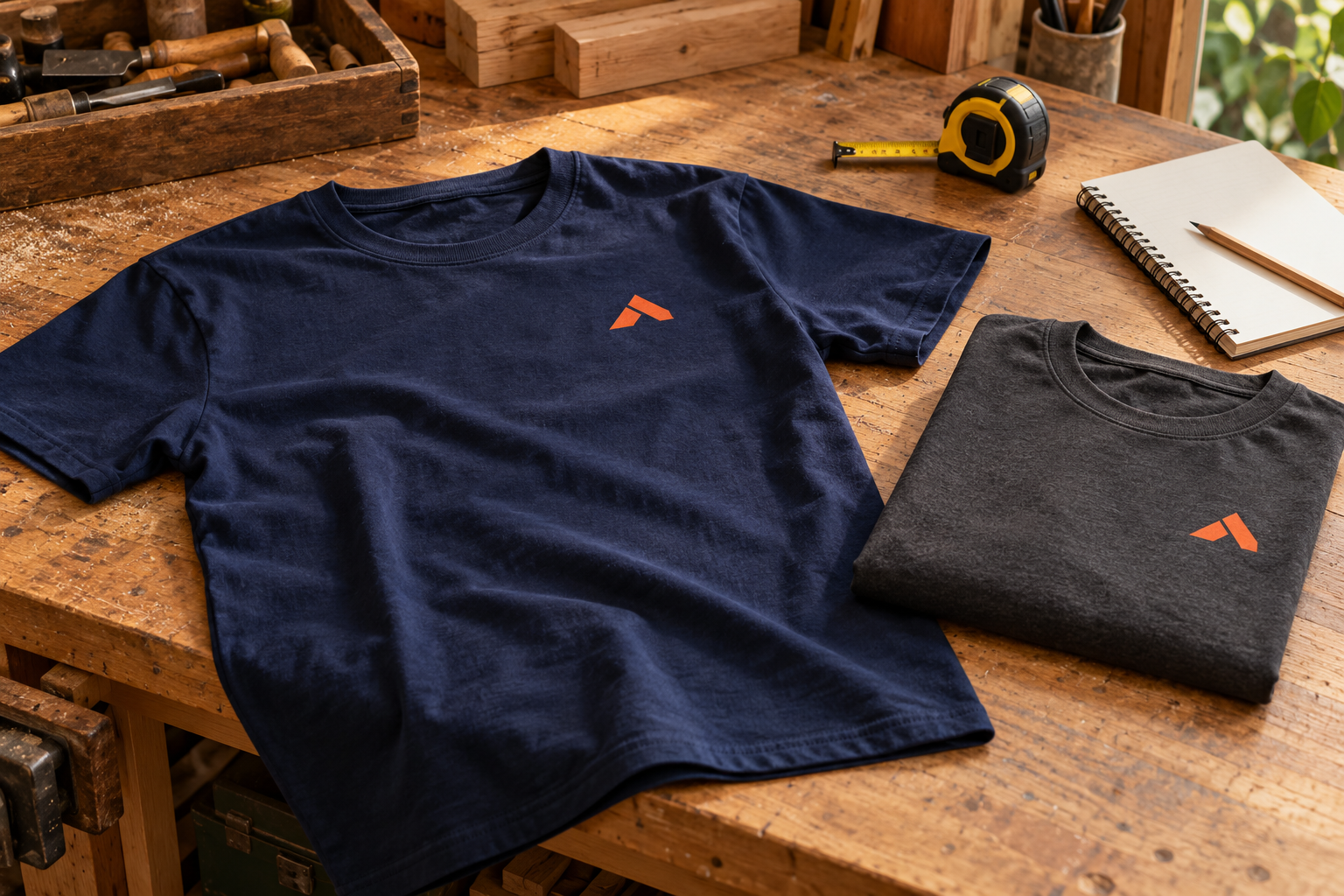
A small chest mark can provide a consistent identity, while a back design may give the company name more space. Decide what the artwork needs to communicate and check the proposed size on the actual garment.
Keep lettering legible and use an approved logo file. If phone numbers or website details are included, proofread every character. Avoid adding so much information that the main company name becomes hard to recognize. Our placement guide explains common options.
Collect a complete issue list
Record quantities by product, colour and size. Keep a separate internal list of which employee receives each item. Decide how many shirts and layers each person needs based on your own issue policy and working pattern.
Share the selected product's size chart with the team. A familiar size in another brand may fit differently. If the range is new, consider sample review before confirming the whole order. Use our size collection guide to organize selections.
Plan replacements using real usage
Review how often garments are replaced and which sizes are actually requested. If you choose to keep spare company clothing, base that quantity on your staffing and issue records. That is different from assuming a supplier will always hold the same garment for you.
Assign one person to collect replacement requests and new-starter needs. Grouping those requests into a clear order makes it easier to check quantities and artwork versions. Ask us to confirm current availability, pricing and timing for each run.
Confirm the decoration and care expectations
Explain the expected wear and cleaning routine when asking for a recommendation. The appropriate decoration depends on the fabric, artwork, location and order scope. Do not assume a process is suitable solely because it was used on a different garment.
Check the care instructions for the finished item and share them with staff. Read our printed apparel care guide as a starting point, alongside the garment label and any project-specific guidance.
Keep one reference for future orders
Save the product names, garment colours, approved proof and final size breakdown together. Note any approved alternatives separately. A substitution needs review because colour, fit and decoration space can differ.
Our reorder guide covers the details worth retaining. Include the day you need clothing ready for distribution when requesting the next order, especially if it is tied to a new crew starting work.
