
How to Care for Printed T-Shirts and Hoodies
Good care starts with the instructions for the finished garment. Check both the clothing label and any decoration-specific guidance before the first wash.
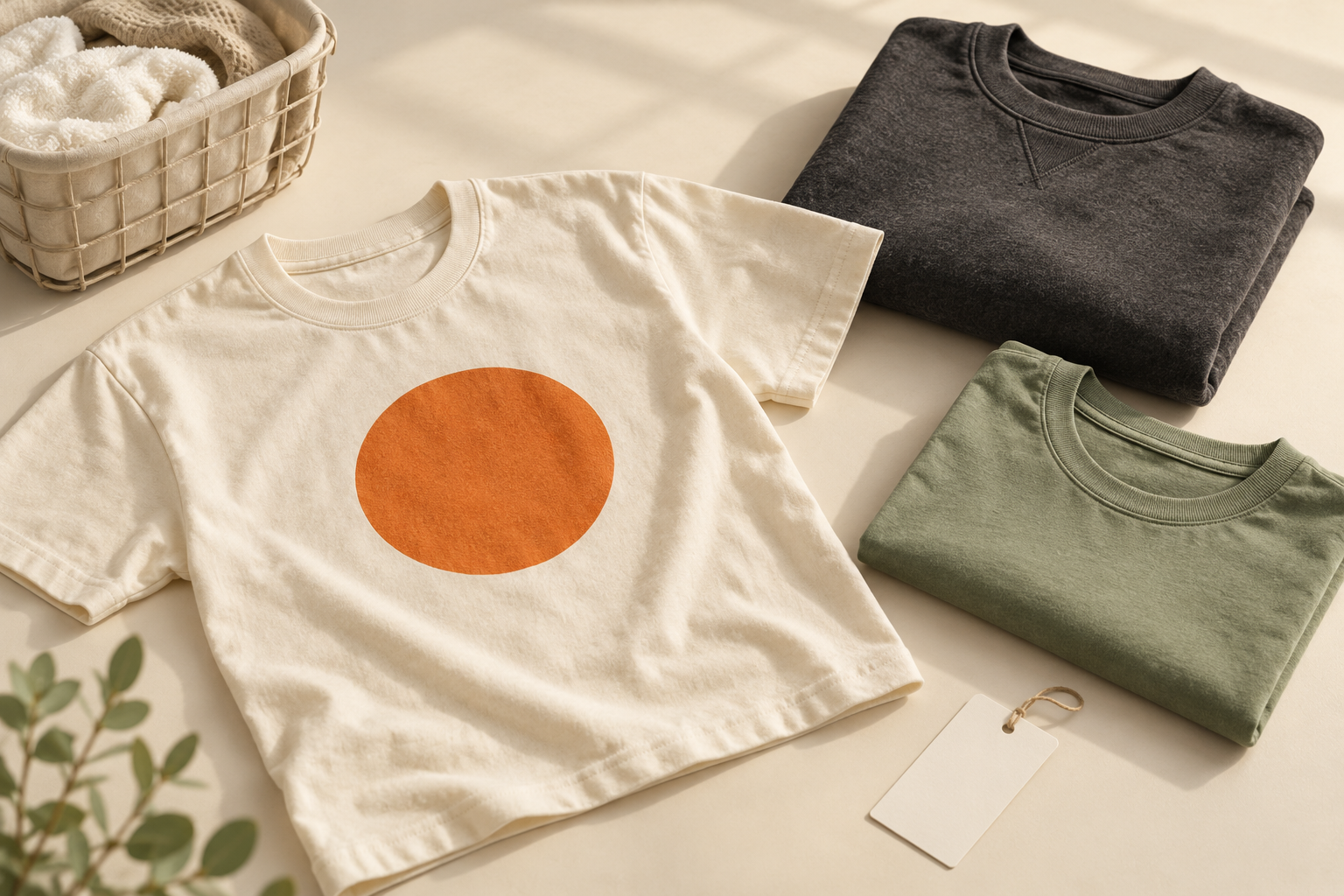
Keep the instructions with the clothing
A custom shirt combines a garment and a decoration process. The label sewn into a blank shirt describes the fabric, but it may not account for a print added later. Ask for the care guidance that applies to your finished order, especially when several garment types or decoration methods are involved.
For a staff order, put that guidance in the handover email or include it when distributing the garments. A simple instruction people can find is more useful than assuming everyone knows how a new print should be washed.
A gentle routine for everyday printed apparel
For ordinary machine-washable T-shirts and hoodies, when both the garment and decoration instructions permit it, a useful starting routine is:
- Turn the garment inside out and wash with similar colours.
- Choose a cool, gentle wash with mild detergent.
- Avoid bleach and unapproved laundry additives.
- Air dry or use low tumble heat only when permitted.
- Keep direct ironing away from the printed design.
Special finishes, structured items and garments with different care labels need their own routine. Check the supplied instructions rather than applying this list to every decorated product.
Make the first wash a deliberate choice
Check whether your order has any waiting period before washing. Do not assume the same timing applies to every screen print, transfer or special finish. Keep the order reference handy so we can identify the garment and process if you have a question.
Sort the clothing by colour and care requirements. Empty pockets and close zips on items being washed together. Avoid mixing a printed tee with rough items that could rub against its surface. If the finished garment instructions recommend washing inside out, turn it before putting it in the machine.
Choose the wash around the finished item
Use the detergent, cycle and water temperature permitted for the garment and decoration. More heat or a stronger cleaning product is not automatically a better choice. Check before using bleach, stain treatments or other laundry additives directly on printed areas.
Care advice can differ even within one decoration category. For example, a particular heat-transfer material may allow household machine washing while ruling out dry cleaning. Those instructions belong to that specific material; they should not be copied across every custom garment in a cupboard.
Check drying and ironing separately
The wash setting is only one part of the routine. Read the drying instructions too, and choose an allowed method rather than automatically using the hottest setting. Reshape and store clothing according to its label, with the printed surface clear of avoidable creasing or abrasion.
Before ironing, check both the garment label and decoration guidance. Avoid putting an iron directly on a design unless the supplied instructions specifically allow it. Do not try to repair a lifting transfer with a household iron or heat press without advice: additional heat can affect the fabric and decoration.
Plan care before choosing uniforms
If your team uses a commercial laundry, tell us before ordering. Share its wash and drying process, chemicals and frequency so suitability can be reviewed. A shirt that suits ordinary household care may not suit an intensive workwear laundry routine.
The same conversation helps when ordering for a gym, kitchen or outdoor crew. Explain how the clothing will actually be worn and cleaned. Compare styles using our fabric weight guide, then confirm the exact product and decoration together.
Give recipients a clear handover
- Identify the garment style and the order reference.
- Share the supplied washing and drying instructions.
- Include any first-wash timing or special-finish guidance.
- Explain who to contact if the instructions are missing.
- Keep a copy for replacements and future orders.
If an item shows an unexpected change, photograph the garment and decoration and contact us with the order number and care routine used. Keep the item available for review. That gives us a better starting point than trying several home fixes first.
Our custom apparel reorder guide covers the other details worth saving. Together, a clear specification and care record help the next batch stay consistent.
