Real Estate Team Apparel: Plan Open-House, Office and Event Clothing
Choose team apparel around the setting where it will be worn. Open-house hosting, everyday office work and community events can call for different garments while sharing a clear brand identity.
Start with the situations your team actually works in
List the occasions where branded clothing will be useful. An open-house host may want a different look from a team setting up an outdoor community event. Office wear, volunteer days and a client appreciation gathering can each have a distinct brief.
For each situation, decide who needs the clothing, what impression it should give and how often it will be worn. This helps you build a small, useful wardrobe instead of ordering several garments that all serve the same purpose.
Choose a core look and purposeful alternatives
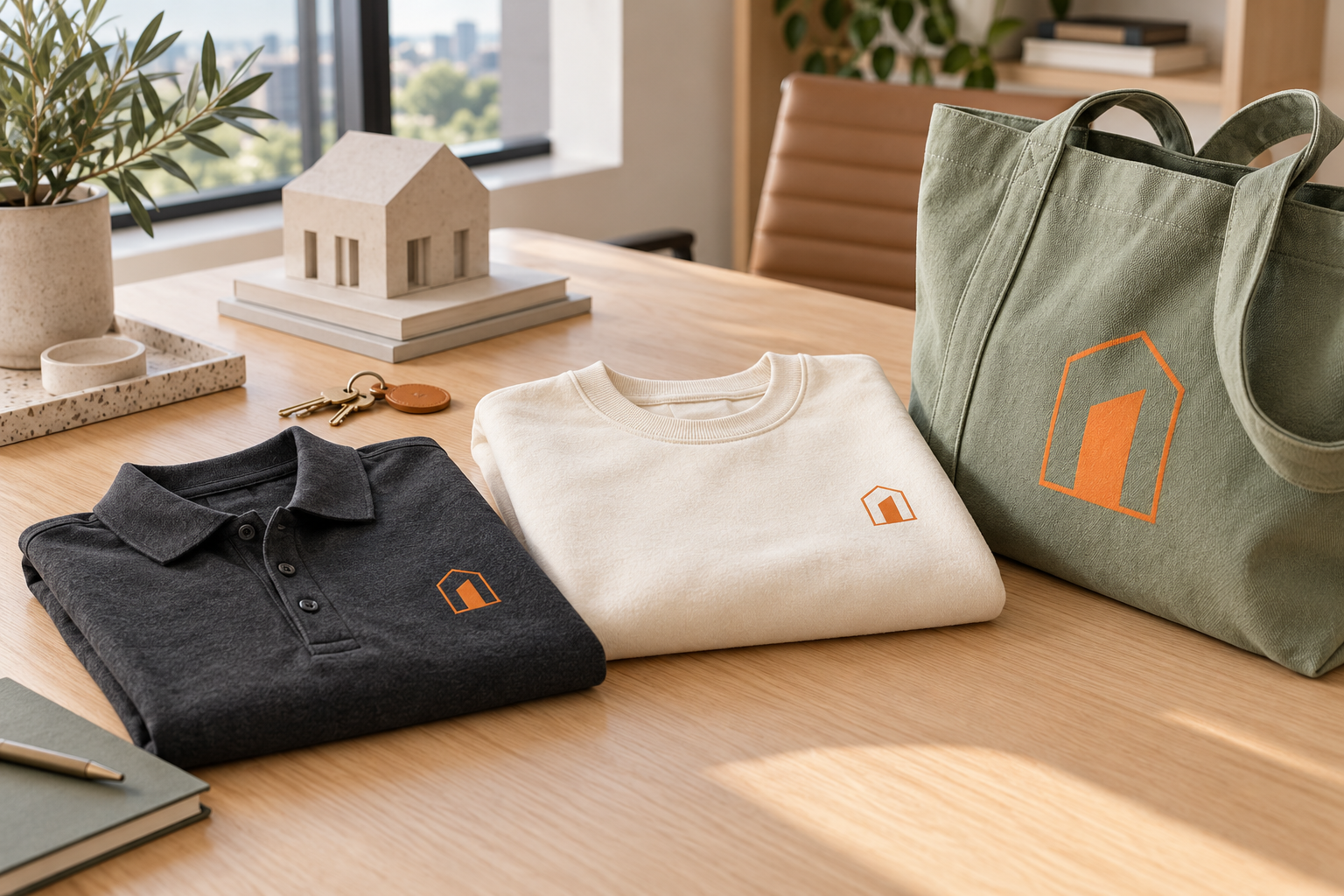
A polo or another collared option may suit a team that wants a consistent hosting outfit. A sweatshirt or quarter-zip can serve as a layer, while a T-shirt may be useful for a casual event. Those are starting points for discussion; the right choice depends on your team's dress expectations and preferences.
Compare the actual fit, fabric, size range and care instructions. If several people will wear a new style regularly, consider checking samples before committing to the full order. Allow useful fit choices while keeping garment colours and decoration consistent.
| Setting | Questions to answer |
|---|---|
| Open-house hosting | Does the garment suit the team presentation, and is the branding clear at conversational distance? |
| Everyday office use | Will people choose to wear it regularly, and does the fit work across the team? |
| Community or outdoor event | What layers and identification are useful for the planned role and conditions? |
| Client appreciation event | Who receives the clothing, and is it staff apparel or a gift? |
Resolve the branding hierarchy before the proof
A team name, brokerage identity and individual agent details may compete for limited space. Decide which marks belong on the garment and which one should lead. Use the approved brand files and have the appropriate person review any brokerage requirements before the design is finalized.
Keep the layout readable rather than adding every contact detail. Tiny wording can be difficult to interpret on clothing, particularly when the wearer is moving. If individual names or roles are important, confirm the final list and how they will be positioned.
Our logo placement guide helps compare chest, back and sleeve options. Discuss decoration suitability for the exact garment and artwork; a logo prepared for a sign may need adjustment for a small stitched or printed position.
Keep colour decisions specific
Choose the garment colour and decoration colours together. A brand mark needs enough contrast to remain legible, and a dark garment may call for an approved alternate logo. Send the appropriate original artwork rather than asking for a logo to be copied from a listing screenshot.
If colour consistency matters, share the brand references and discuss how they apply to the selected decoration process. A digital preview is a useful review tool, but it is not a physical colour sample. Our colour matching guide explains the practical questions to settle.
Collect fit choices and approve one final specification
Give each person the exact product and size chart. Record selections by style and size, then total them into one order breakdown. If the team is choosing between two fits, label the styles clearly so an unqualified “medium” does not become ambiguous.
Choose one person to consolidate feedback on the proof. Check logo versions, personal names, garment colours, print dimensions and positions before approval. Confirm the complete quote and required in-hand date as well as the visual design.
Separate team clothing from client gifts
Branded apparel for staff and merchandise given to clients need different quantity plans. Staff sizes can be collected directly; gifts may involve unknown preferences and fit. Decide whether a product that does not require a clothing size would be more useful for a particular audience.
If you add totes, drinkware or another promotional product, define its purpose and confirm the exact item's decoration area and care instructions. Keep gift quantities separate from staff allocations so both budgets remain easy to understand.
Make new-starter and repeat orders easier
Save the brand and style codes, garment colours, approved artwork, decoration details and order reference. Keep a short list of approved alternatives if the team wants flexibility, but review availability and any changes before placing another order.
Explore our real estate team apparel page for clothing and merchandise ideas. The reorder guide can help you keep the record useful as your team grows.
