Landscaping Crew Apparel: Plan a Season of Shirts, Layers and New Starters
A seasonal crew needs more than a single size list. Connect your apparel order to hiring dates, changing layers and the way you issue clothing throughout the year.
Build the order around your season
Start with the dates when people join the team, rather than one annual total. List the returning crew, confirmed new starters and any roles you are still recruiting. Keep estimated needs separate from named employees with confirmed sizes.
Then map the clothing to the workday. An early-morning layer, a main shirt and an item used for client meetings have different purposes. Planning those uses first helps you avoid buying several similar products while missing the one piece staff need most.
Separate everyday branding from required workwear
This guide covers ordinary branded apparel. If a job or site requires particular protective clothing, have the responsible person identify the exact requirements before products are selected. A company logo does not establish a garment's suitability for that task.
Explain the intended work when requesting options. Fabric feel, fit, sleeve length and how a garment layers are useful parts of the brief. Product photographs can help build a shortlist, but the actual specifications and your team's requirements should guide the decision.
Choose a core shirt and a compatible layer
A focused range is easier to issue and repeat. Consider one everyday shirt and one layer, then add other products only where they have a clear use. Ask staff what worked in the previous season: fit feedback and replacement patterns are more useful than simply repeating the old quantity.
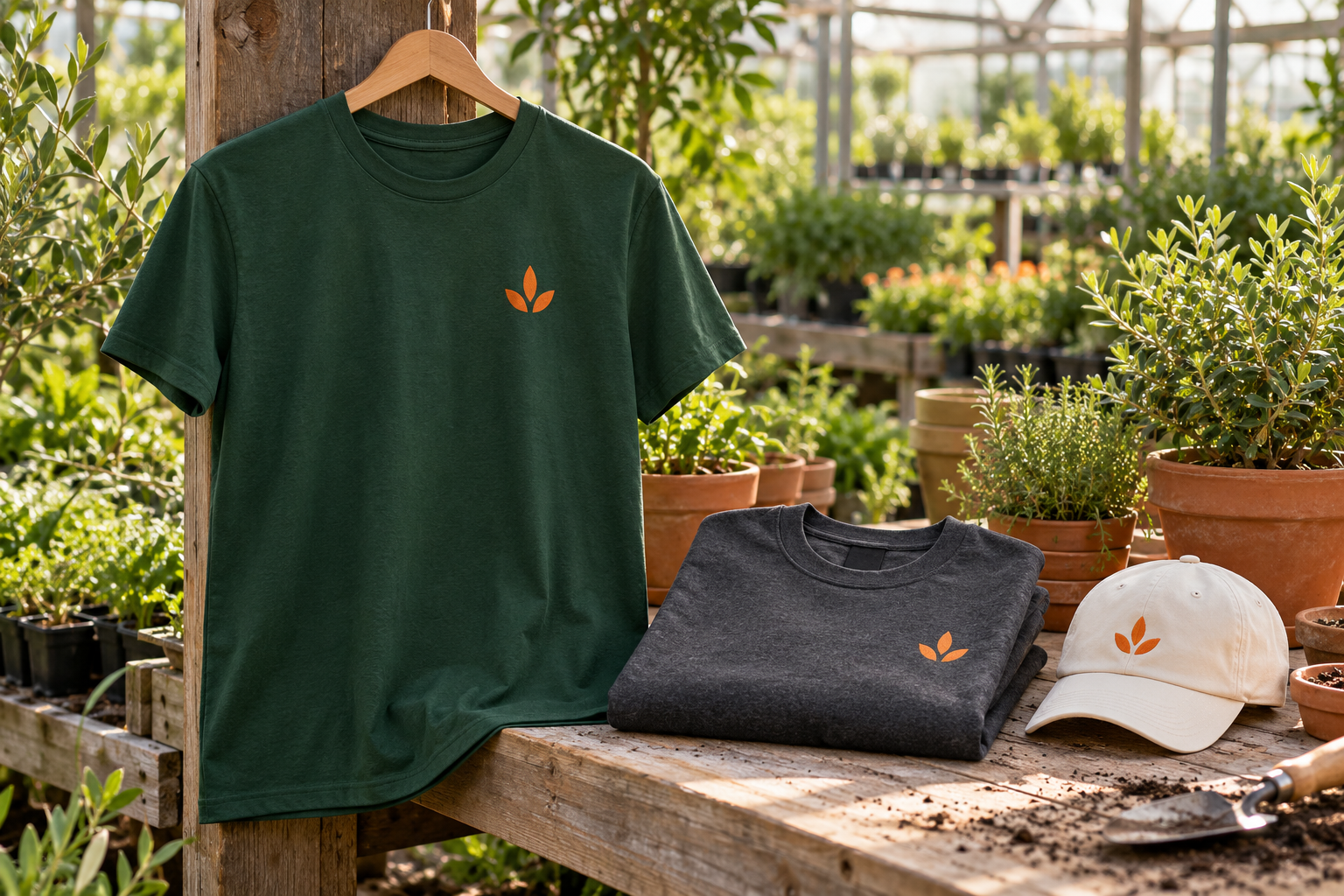
Review the products together. A chest mark can provide a consistent identity across the range, while a back print gives the company name more space. Check whether a hood or an open layer covers information you want visible. Our logo placement guide covers those tradeoffs.
Make a simple issue plan
Record the number of pieces each employee receives for each product. Keep the production breakdown grouped by style, colour and size, with a separate internal allocation list for handing clothing to staff. This avoids mixing personal names into the garment totals.
Share the selected product's size chart and set a response deadline. If you are changing styles, consider samples before confirming the full run. Use the group size collection guide to gather complete selections.
| Planning point | Record before ordering |
|---|---|
| Returning crew | Confirmed products, sizes and number of pieces to issue. |
| New starters | Start date, confirmed size and who collects missing information. |
| Seasonal layers | Expected use and how the logo works across the chosen products. |
| Replacements | Actual requests and the person responsible for the next order. |
Use replacement records to plan the next run
Keep a note of which items need replacing and why. A change in fit preference is a different issue from a new employee joining or a garment wearing out. That detail helps refine the product choice and future quantities.
If your business chooses to keep spare clothing, base the mix on its own staffing and issue records. Ask us to confirm availability and timing for each follow-up order; a previous purchase does not guarantee that every size and colour will remain available.
Save one approved reference
Keep the approved artwork, garment colours, decoration dimensions and final quantities together. Assign one person to consolidate changes so the next order starts from a clear reference. Review any substitute garment before treating it as an equivalent.
Explore our landscaping company apparel page for product ideas. When you are ready, send the brief with the day you need the clothing ready to distribute, leaving room to review the quote and mockup before production.
