Restaurant Staff Apparel: Plan Front-of-House, Kitchen and Event Clothing
A restaurant apparel order starts with the work people do. Choose a clear look for each role, then organize the products, sizes and decoration around real shifts.
Start with roles, rather than one uniform for everyone
Write down who needs clothing and what each person does during a shift. Front-of-house staff, kitchen teams, delivery staff and managers may need different garments. A consistent logo and colour palette can connect those choices without forcing every role into the same product.
Separate everyday workwear from promotional shirts for a launch, patio season or a special event. An event design might include a date or campaign graphic, while a core staff shirt should still make sense when the promotion finishes. Keeping those uses separate also makes later orders easier to explain.
Choose garments for the working environment
Consider heat, movement, layering and the cleaning routine when reviewing products. Ask staff which features matter during service: sleeve length, fit, pocket position or an apron that works with their station. Check product specifications rather than assuming a particular fabric is suitable because it looks right in a photograph.
Restaurant clothing is not automatically protective workwear. If a role has specific safety or uniform requirements, identify those before selecting the product. Decoration should not obstruct required features or replace the assessment needed for the actual work environment.
Review the shirt and apron together
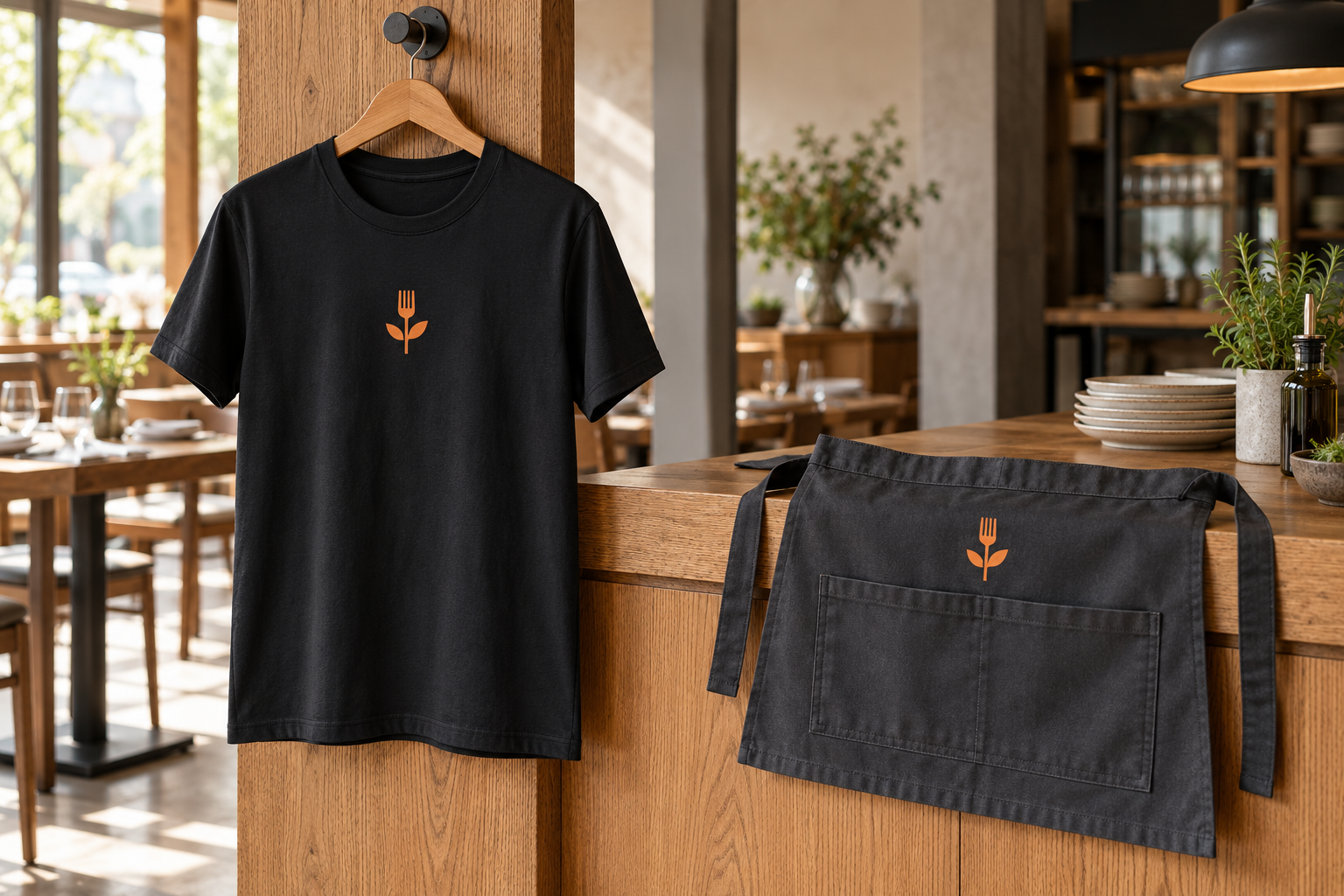
An apron can cover a chest logo or change how a large front design reads. Look at the full combination before approving placement. If staff wear open overshirts or layers, check which mark remains visible while they work.
A modest chest mark may suit a regular service uniform, while a back print can help identify staff at a busy outdoor event. Give us the exact products and intended placements so we can discuss a suitable decoration approach. Pockets, seams, zips and straps affect the usable area.
Collect sizes from the selected product
Share the actual size chart for each style. A familiar size label does not guarantee the same fit across shirts, polos and layers. If you are changing your uniform, reviewing samples can help avoid ordering a full team run based on assumptions.
Record quantities by product, colour and size, with a separate internal staff allocation list. Decide how many pieces each person receives and whether replacement garments belong in the same order. Use your previous issue records and current staffing needs to choose quantities, rather than adding an arbitrary extra amount in every size.
| Role or use | Question to settle |
|---|---|
| Front of house | How does the logo look with the apron and expected layers? |
| Kitchen team | Does the selected garment meet the role's actual requirements? |
| Managers | Should their garment or mark differ from the service team? |
| Special events | Is the design reusable after the event? |
Keep branding legible and easy to repeat
Provide the best original logo file available and identify the approved colour version. Fine lettering and small details need review at the intended decoration size. A logo that works on a menu may need adjustments for a small garment application; review those changes before approving production.
If your restaurant uses several marks, specify which one belongs on each item. Check the business name, location wording and any staff titles. Our logo placement guide can help you think through positions, while the written proof should confirm the actual agreed dimensions.
Plan replacements before the first order arrives
Save the product name, colour, size breakdown and approved artwork together. Record any alternate garment choice that was discussed, but do not assume it can be substituted automatically later. Availability, colour and fit can change between orders.
Choose one person to collect requests from the team. Grouping replacements into a clear brief helps avoid conflicting instructions from different shifts. Ask us to confirm availability, pricing and timing for each repeat order before promising a start date to a new employee.
For the first order, send the full brief and explain when the clothing needs to be ready for staff distribution. Allow time to review the mockup and sort the finished garments. See our mockup approval guide and size collection guide for the checks that make a team order easier to manage.
