Your First Business Apparel Order: Build a Clear Brief Before Requesting a Quote
You do not need to know every printing term to start a branded apparel order. A clear description of who will wear it, what you need and when you need it is the useful first step.
Describe the job the apparel needs to do
Start with the wearer and the setting. Are you outfitting a small staff team, creating merchandise to sell or preparing clothing for an event? Those uses can lead to different choices even when the same logo appears on every item.
Explain what matters most: a particular fit, a consistent staff appearance, a specific garment colour or a product customers will want to wear again. If you have a budget target, include it with the scope. That helps guide the options without assuming the cheapest blank garment is the best fit.
Keep the first product range manageable
Begin with one main item and add a second only if it has a clear purpose. A shirt and a layer can meet different needs, while several nearly identical shirts can make a small order harder to organize. Review our best sellers for a starting shortlist.
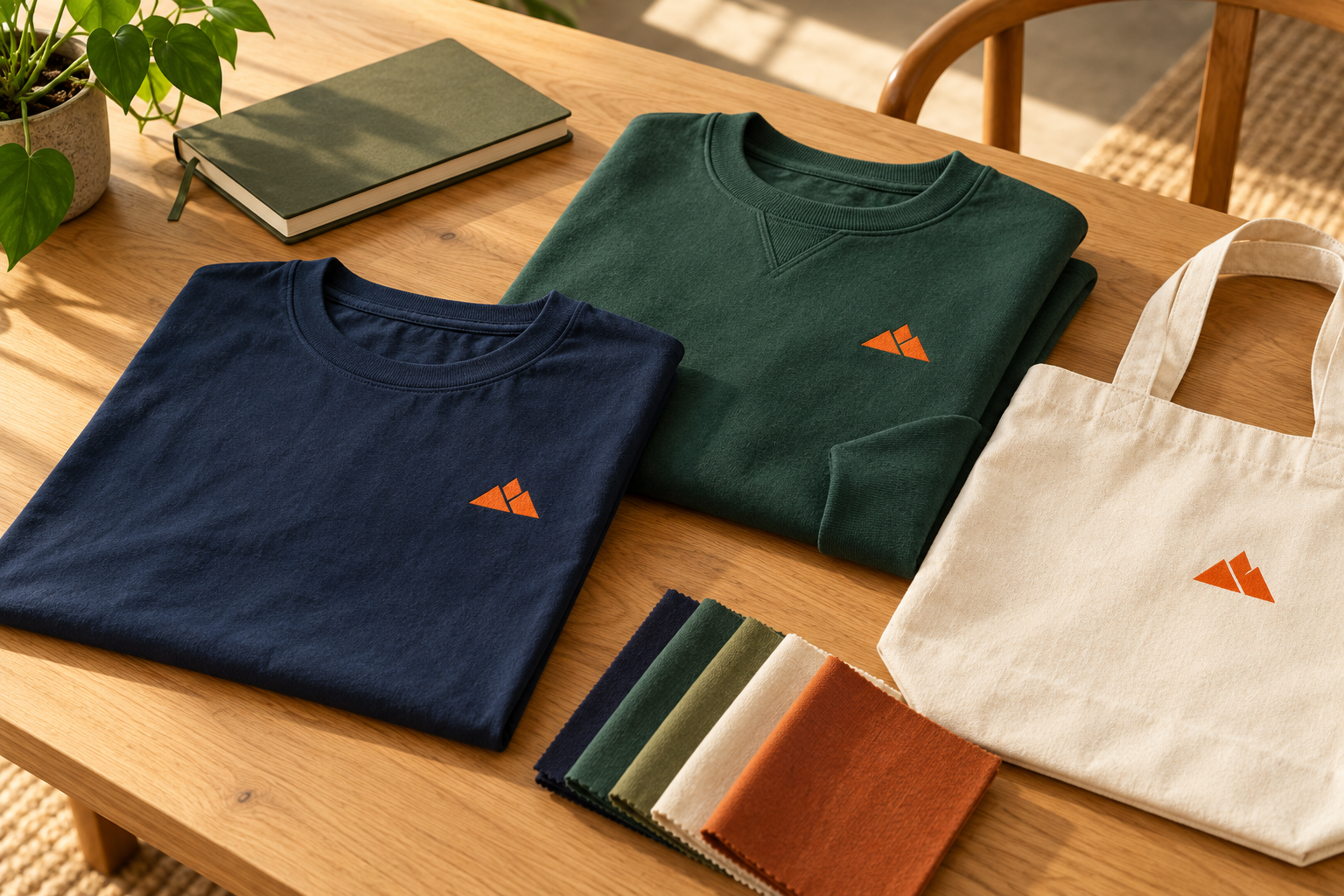
If you already have a preferred product, send its name or link. If you do not, describe the fit, fabric feel and intended use you want. A photograph can communicate the general look, but the actual product and its specifications still need to be selected and confirmed.
Separate estimates from final quantities
An approximate total helps start the conversation. A production order needs a complete breakdown by style, colour and size. Make clear which numbers are provisional so a planning estimate is not mistaken for the final instruction.
Once a product is selected, share its size chart with the people ordering. Avoid translating everyone's usual size from another brand. If fit is especially important, discuss samples before collecting final selections. Our group size guide explains a simple collection process.
Send useful artwork and placement information
Provide the original logo or highest-quality file you have. A screenshot from a website can help identify the design, but it may not be suitable for production. Tell us if the file is all you have so we can review the next step rather than silently treating it as print ready.
Identify each decoration location separately. A front chest logo and a back graphic are two different parts of the brief. Include desired dimensions if you have them; otherwise explain the look you want and ask for guidance. Small lettering, detailed illustrations and garment features can affect the proposed treatment.
| Brief item | Useful information |
|---|---|
| Purpose | Who will wear it, and where? |
| Products | Preferred item, colour and fit, or the options you need help choosing. |
| Quantity | Approximate total first, followed by a final size breakdown. |
| Decoration | Artwork files, locations and any requested dimensions. |
| Timing | The day you need the goods in hand and any event date. |
Give the real in-hand deadline
Tell us when you need to receive the order, rather than only when your event starts. You may need time to sort clothing, distribute it to staff or pack it for travel. If delivery is required, include the destination and ask us to confirm the schedule.
Do not assume a turnaround from another product or a previous project applies automatically. Availability, artwork preparation, approval and production scope all matter. If timing is tight, say so at the start and wait for confirmation before making commitments to the group.
Review the quote and mockup together
The quote and visual proof answer different questions. Review the listed products, quantities and decoration alongside the mockup's artwork and placement. Check spelling, colours and written dimensions; a screen image alone does not establish the exact physical size of a print.
Choose one person to consolidate feedback. If anything changes, review the revised information before approving it. Our mockup approval guide walks through the details worth checking.
Keep a record for the next order
Save the approved proof, final product selection and size breakdown together. Add notes about fit and wearer feedback once the clothing is in use. That creates a practical starting point for a reorder without relying on a photo or memory.
A repeat order still needs confirmation of current availability, pricing and timing. If you expect the team to grow, mention that during the first conversation so future ordering can be considered. See our reorder guide for the details worth retaining.
