Apparel & Ordering
Hoodies vs. Crewnecks vs. Quarter-Zips: Choosing Corporate Apparel
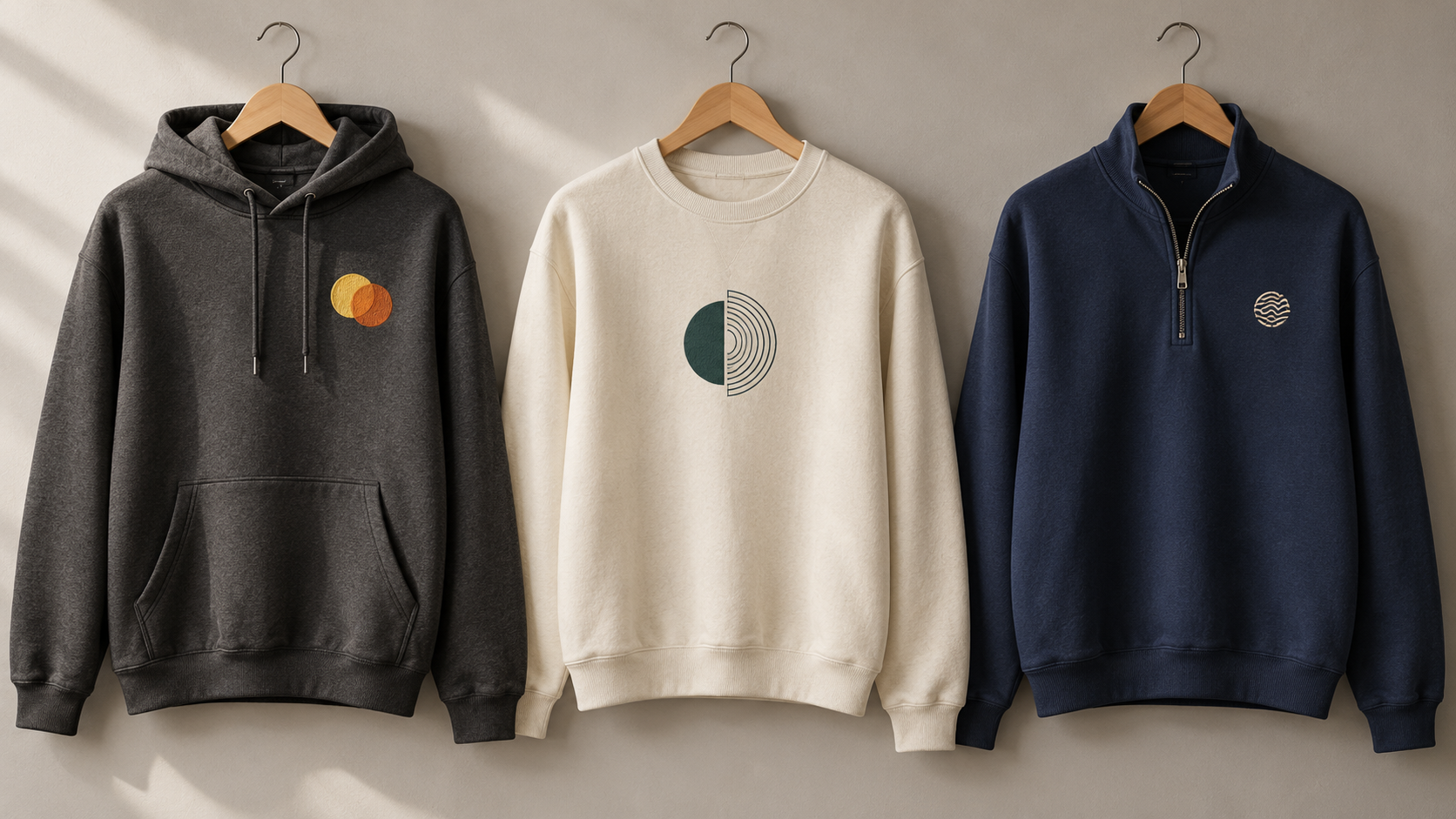
Hoodies, crewneck sweatshirts and quarter-zips can all make useful branded layers. The best choice depends on where people will wear them, how the garment fits your brand and what your artwork needs. For a team in Burnaby or Vancouver, think about the workday and the season before choosing the most familiar style.
Hoodies: relaxed teamwear and merchandise
A pullover hoodie suits a casual workplace, school group, creative team or merchandise collection. A hood and pouch pocket make the silhouette distinctive, but they also limit some decoration placements. A large front print needs to fit above the pocket; a back print needs to account for the hood when it is down.
Choose the fabric weight for how the garment will be used. A substantial fleece hoodie can feel cosy in cooler weather, while a lighter layer may be easier to wear indoors. Check the size chart and sample fit rather than assuming every brand’s medium fits the same.
Crewnecks: a simple silhouette with flexible branding
A crewneck removes the hood and front pocket, giving you a cleaner garment and a straightforward decoration surface. It can work for staff clothing, school apparel and a retail merch drop. A small chest mark creates a restrained look; a larger illustration gives the garment a different character.
Crewnecks are also useful when a hood would interfere with another layer. Consider the collar, cuff construction and fit, especially if staff will wear the sweatshirt over a collared shirt or alongside other uniform pieces.
Quarter-zips: a polished layer for customer-facing teams
A quarter-zip often fits a business-casual uniform, corporate gift or event team. The zipper provides a different collar shape and some ventilation. Fabrics range from fleece to smoother performance materials, so “quarter-zip” describes the style rather than one fixed level of warmth.
A small embroidered chest logo is a common choice, but suitability depends on the fabric and construction. Thin or stretchy material may need careful stabilization. Keep the design clear of the zipper and seams, and ask the decorator to review the garment before assuming it will work with a particular method.
A quick comparison
| Style | Typical use | Check before ordering |
|---|---|---|
| Hoodie | Casual teams, schools, event or retail merch | Hood and pocket clearance; fleece weight |
| Crewneck | Simple staff layer or versatile merchandise | Fit, collar and intended print placement |
| Quarter-zip | Business-casual uniforms and corporate gifts | Zipper clearance, fabric stretch and logo size |
Choose decoration for the artwork and fabric
Screen printing can suit a bold design repeated across a larger run. DTF can reproduce detailed or full-colour artwork on suitable materials. Embroidery gives a stitched finish for an appropriate logo and garment. None of these choices should be made from the garment name alone: fabric, seams, artwork and placement all matter.
A detailed illustration may need changes to embroider cleanly. Polyester or treated performance fabric may require a specific printing approach. Read our screen printing and DTF comparison or embroidery pricing guide to understand the tradeoffs before requesting your quote.
- Describe the workplace, event or merchandise audience.
- Choose the intended warmth, fit and garment colours.
- Collect individual size requirements and review a sample.
- Provide the artwork and preferred decoration placement.
- Include quantities, delivery location and the date you need the garments.
Build consistency across different styles
You do not have to put everyone in the same silhouette. A hoodie for a casual team and a quarter-zip for customer-facing staff can still belong to one apparel program if the logo treatment and colour palette are coordinated. Ask for each style to be proofed at its own decoration size.
Record the approved garment brands, styles and colour references for reorders. Our colour matching guide explains why matching thread, ink and fabric takes more than copying a colour from a screen.
