
Business & Team Merch
Café Merchandise: Custom T-Shirts, Totes & Beanies Customers Want to Wear
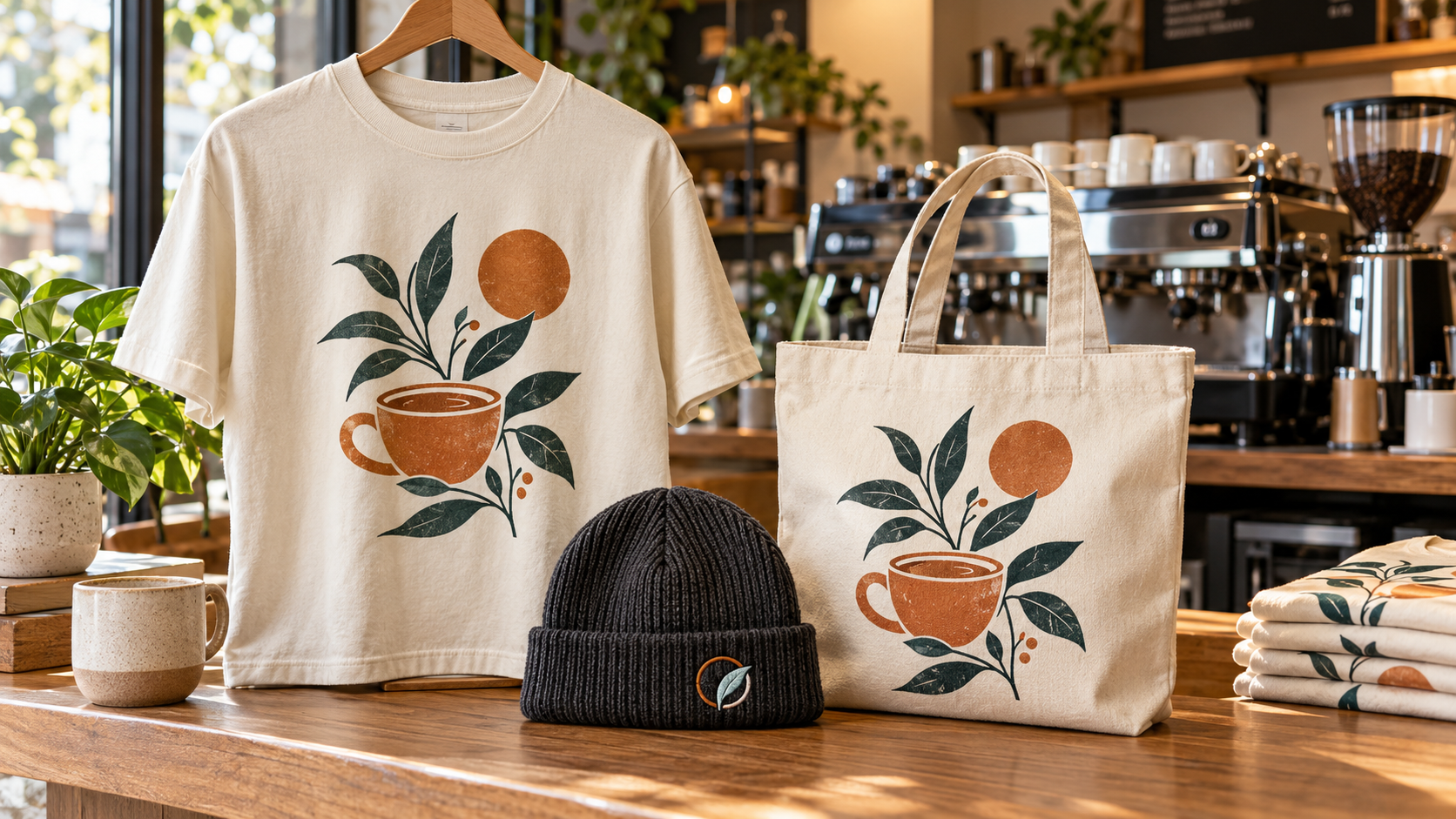
For an independent coffee shop, merchandise can extend the personality customers already love: the artwork on the wall, the atmosphere and the daily ritual of a good cup. The best café merchandise feels like something a customer would choose to wear, even when they are not standing at your counter. Start with a focused collection that fits your audience and your budget.
Separate staff uniforms from retail merchandise
Staff apparel has a practical job. Aprons and shirts need to suit a busy shift, wash reliably and help customers recognize your team. Ask about fabric, fit, care instructions and decoration placement before making a uniform decision. A dark colour may be useful behind the counter, but choose it because it suits your workplace, not because every café must use black.
Retail merch has a different goal: customers need a reason to buy it. A comfortable T-shirt, well-made tote or favourite winter beanie should reflect your café’s identity and feel useful outside the shop. You can share a colour palette between uniforms and retail items without putting the same large logo on everything.
Choose one or two products for your first drop
Cotton tote bags offer a practical place for a bold illustration and are easy to display near the checkout. Check handle length, bag dimensions and fabric weight so the finished item feels right for shopping or everyday use.
T-shirts and crewnecks work well when your design is strong enough to wear on its own. Fit and fabric matter as much as the graphic. A sample lets you assess the garment before you commit to a size run.
Beanies or caps can carry a small embroidered mark or patch. Keep the design suitable for the available decoration area; detailed artwork may need simplifying.
Rather than launching every option at once, choose the item your regulars already ask about and one complementary piece. That gives you a clearer picture of demand and reduces the number of sizes and colours you need to manage.
Design around your café’s character
A thoughtfully drawn coffee cup, botanical illustration, typographic design or artwork inspired by your interior can be more appealing than enlarging a business logo. Use original artwork or properly licensed designs, and make sure you have permission to reproduce any illustration.
Keep the first collection coherent. One design, one or two garment colours and a simple display are easier to recognize than a table of unrelated products. Review the artwork at its actual print size; a beautiful detailed illustration on a screen may lose clarity when reduced to a small chest print.
Match the decoration method to the order
Screen printing is a strong option for repeat designs and larger runs with a limited number of colours. DTF can be useful for full-colour artwork, detailed illustrations and a small test run. Embroidery creates a stitched finish for suitable hats, beanies and other garments.
The right method depends on the product, artwork, quantity and budget. Ask for a quote that separates garment cost, decoration, setup and any shipping. Compare our screen printing and DTF guide, and read the embroidery pricing guide if you are planning a stitched logo.
- Choose the main product and intended retail price.
- Confirm your artwork, print size and colour references.
- Plan size quantities using customer interest, not an even split by default.
- Review a garment sample and the digital proof.
- Allow time for artwork approval, production and delivery.
Test, track and reorder with purpose
Give the collection a visible home in the café and show how the items look when worn or carried. Track sales by style, size and colour. Use those results to choose your next order instead of assuming every item needs the same restock.
A seasonal colour or a new artist collaboration can refresh a popular design, but keep dependable favourites available too. Retain your approved artwork and garment specifications so repeat orders are easier to plan. Our brand colour matching guide explains what to record for a consistent collection.
