Bookstore Merchandise: Build a Small Collection Readers Want to Keep
Bookstore merchandise should feel like an extension of the shop. Begin with one clear idea and a few useful products, then learn from what readers actually choose.
Give the collection a clear identity
Think about why readers visit your shop. The neighbourhood, a specialist subject, a distinctive illustration or the feeling of spending an afternoon among books can all provide a direction. Choose one idea that belongs to the store rather than trying to summarize everything it sells.
A simple shop mark may suit staff clothing, while a more expressive design can work for merchandise. Decide whether the range is mainly for regular customers, visitors or an event audience. That choice helps connect the artwork to the product and its intended price position.
Start with products that earn their space
A tote can be useful for carrying purchases, while a T-shirt or crewneck gives customers another way to connect with the shop. Begin with a focused selection. A small first range is easier to display and track than several products with similar roles.
Review a bag's actual dimensions, handles and construction before choosing it. If you want it to accommodate particular books or folders, compare those items with the measurements. Our tote bag guide covers the decisions worth making before artwork is finalized.
Make artwork belong to the garment
A design prepared for a rectangular poster may need a different arrangement on a chest or tote panel. Check the shape and usable area of the selected product. Give lettering room to read and keep the main idea recognizable at the finished size.
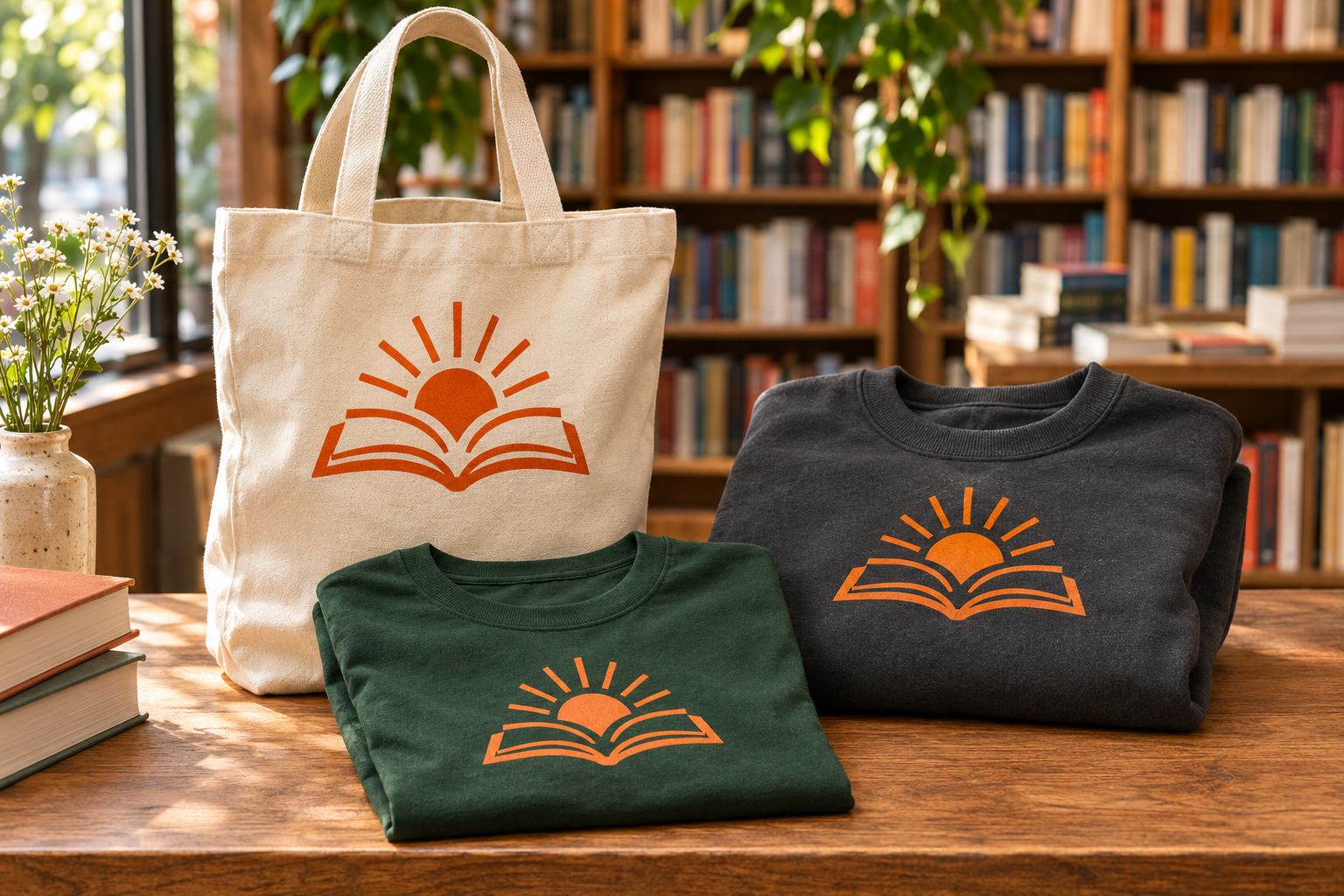
For a coordinated range, consider adapting the same illustration to each item rather than applying one size everywhere. A small chest emblem and a larger tote graphic can share an identity while serving different viewing distances. Record those versions clearly in the brief.
Use original or appropriately authorized material
Shop-created artwork offers a useful starting point. If a design uses a book cover, author image or an outside illustrator's work, confirm that you have permission for the intended merchandise use. An image available for promoting an event should not automatically be treated as merchandise artwork.
Keep the approved source files with the project and identify which version should be reproduced. If someone is preparing the art for you, explain the planned products and decoration sizes early so the layout is built for the actual range.
Separate the staff order from retail quantities
Staff clothing can be collected as named size selections. Retail merchandise needs a different quantity decision because the eventual buyers are not yet known. Use your own past sales, customer requests or a pre-order to inform the mix rather than assuming a universal size ratio.
Keep totals grouped by product, colour and size. If you are starting without sales history, a focused range makes the result easier to evaluate. Record what sells, what customers ask for and which options remain on display.
Plan the display before launch
Decide where the products will sit and how customers will understand the choices. A displayed sample should make the design and product clear, with sizes and purchasing arrangements explained through the shop's own process. Keep the display consistent with the actual stock available.
If the collection is tied to an anniversary or reading event, tell us when the goods need to arrive for checking and setup. Ask for a confirmed schedule before announcing a firm launch date. Allow time to review the artwork and final quantities.
Make reorders evidence-based
Save the product selections, colours, artwork dimensions and approved proof. Use the results of the first run to refine the next one. Ask us to confirm current availability, pricing and timing before advertising a restock.
Our reorder guide explains which details are useful to retain. Explore the bookstore merchandise page for product ideas, then send us a focused brief for your collection.
